

Nine Years of Bookkeeping: Changes in Tools, Methods, and Mindset
In recent years, bookkeeping has long ceased to be merely an act of recording numbers for me; it is a ritual I look forward to. At the start of each month, I set aside a little time to carefully review the income, expenses, and asset changes of the past month—this is my monthly ritual of financial review. To this day, I have been keeping accounts for nine years. During this time, I have experienced the convenience brought by automated bookkeeping, and I have also been forced to interrupt it due to a lack of suitable tools. It was not until the past three years, after finding a bookkeeping method that suits me, that keeping accounts is no longer a difficult task for me, and I have gradually come to enjoy the process.
Preface
In recent years, bookkeeping has long ceased to be merely an act of recording numbers for me; it has become a ritual I look forward to. At the beginning of each month, I set aside a little time to carefully review the income, expenses, and asset changes of the past month—this is my monthly ritual of financial review.
To this day, I have been keeping accounts for 9 years. During this time, I have experienced the convenience brought by automated bookkeeping, and I have also encountered forced interruptions in bookkeeping due to a lack of tools. It was not until the past three years, after finding a bookkeeping method that suits me, that bookkeeping is no longer a difficult task for me, and I have gradually come to enjoy the process. At the same time, along this journey of tinkering, I have also developed some small tools to assist with bookkeeping for myself, which I have continued to iterate on to this day, making the process of bookkeeping full of a sense of accomplishment.
A long time ago, I wanted to write out my bookkeeping philosophy and discuss it with everyone, but I kept putting off actually starting. Now I have finally mustered the courage to write this article, as a summary of my thoughts during this period, and also as a way to exchange and clash ideas with everyone—a modest contribution to spark discussion.
So let the story begin with my bookkeeping experience.
My 9 Years of Bookkeeping Experience
Although I have a full 9 years of bookkeeping experience, it can generally be divided into three stages:
1. Enjoying the Convenience of Automated Bookkeeping
The first time I felt the joy of bookkeeping was in 2016, when I started using the app NetEase Youqian. This app had a killer feature: it could automatically sync bank card statement data from the banking system and then display it in aggregate within the app. From the first day I tried it, I could not do without it. Through the automatic statement syncing feature, bookkeeping for me was nothing more than tapping a few buttons on my phone. Within just a few minutes, the software could quickly collect the expenses and income from my bank cards and produce the corresponding reports, while I reviewed my spending reports like an emperor reviewing memorials, pondering over the various charts.
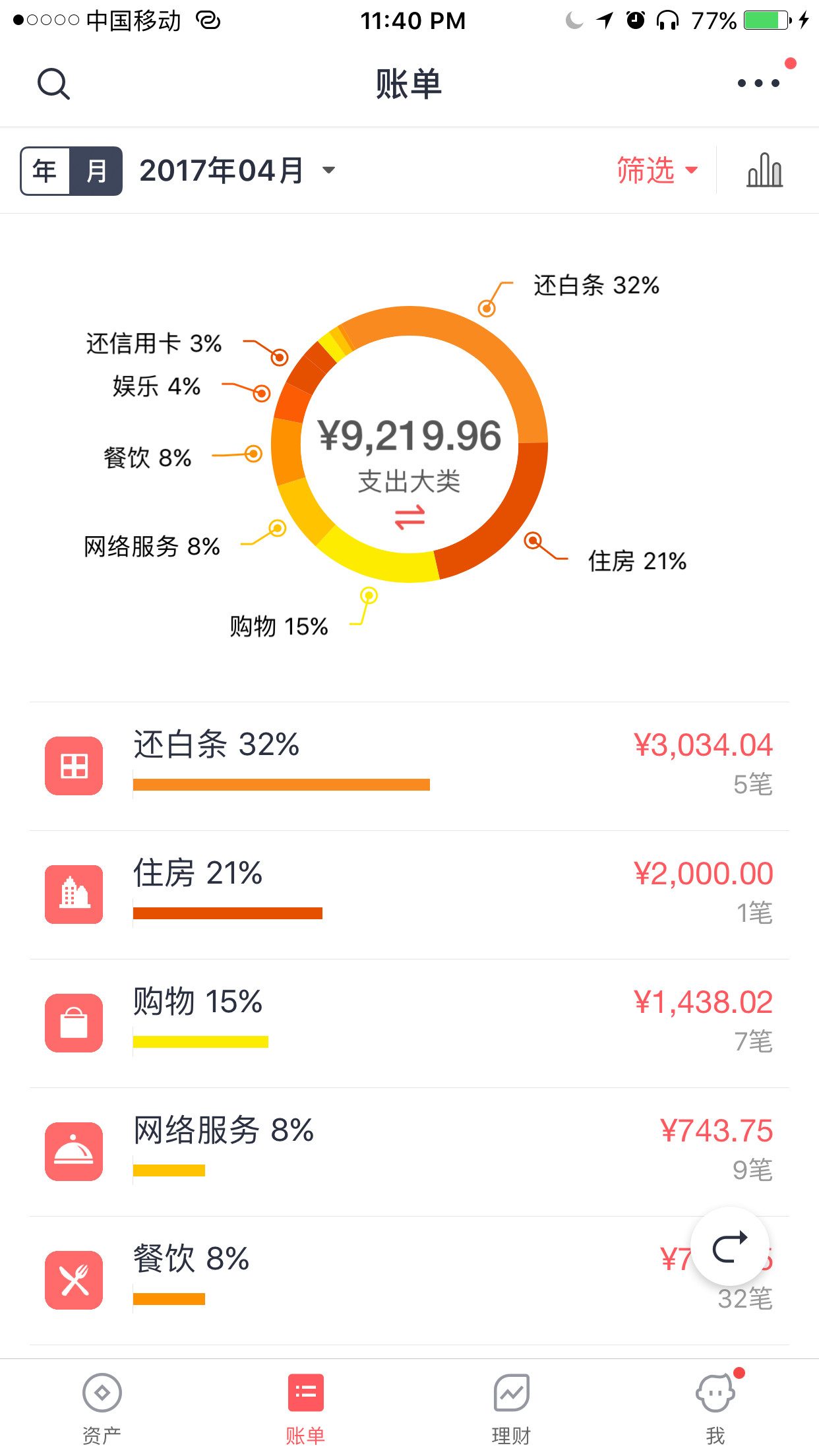
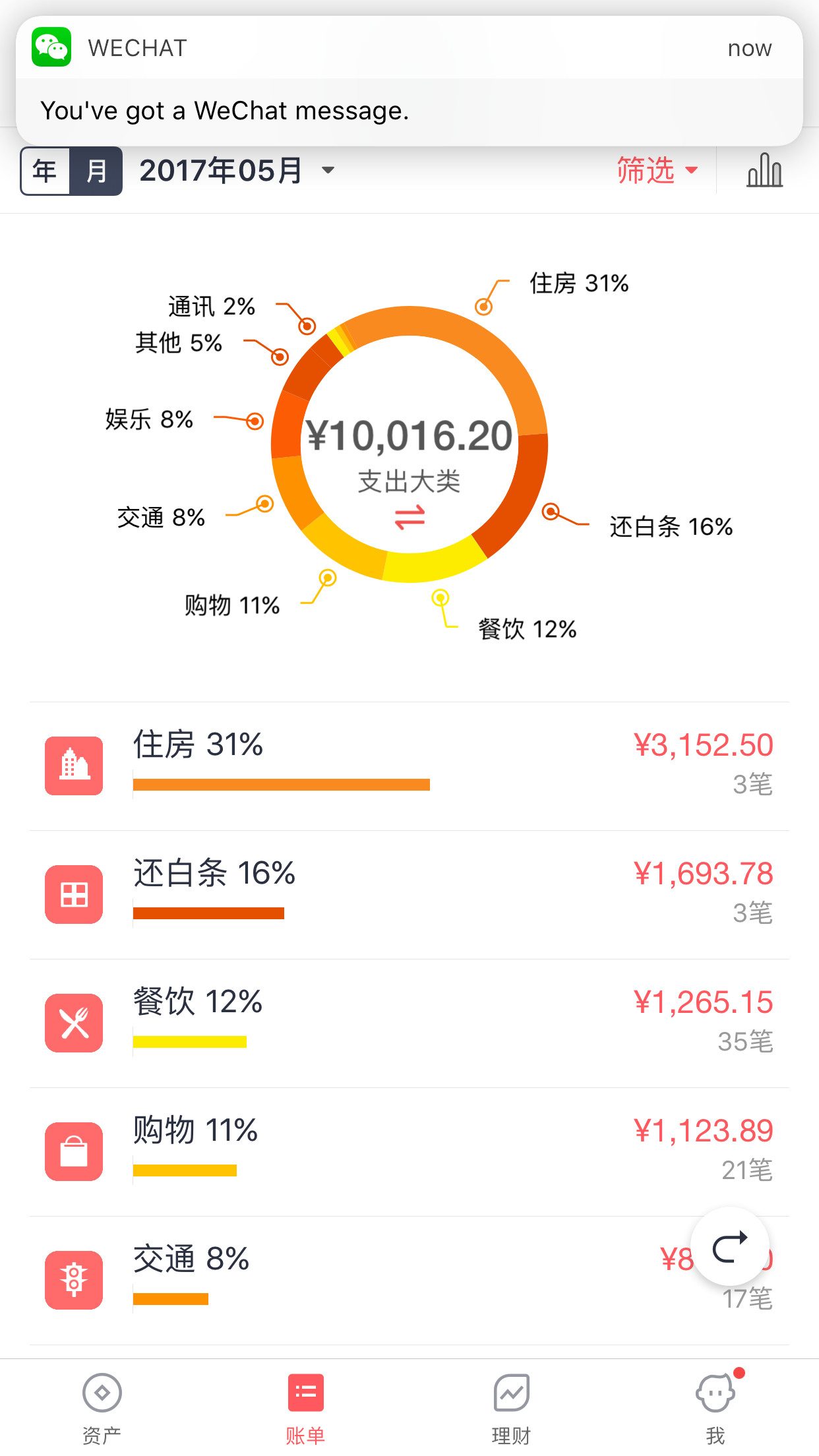
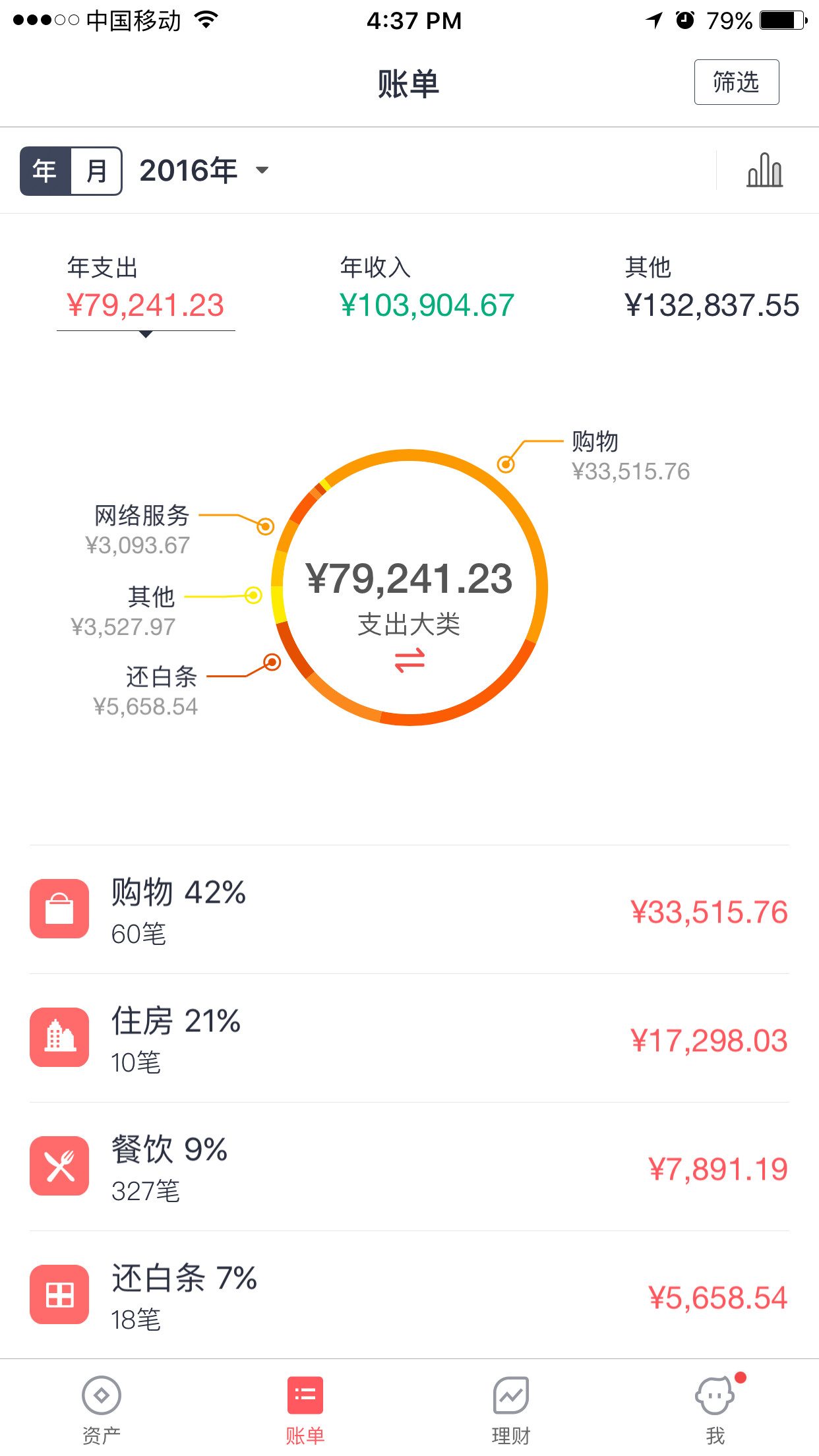
Thanks to the convenience of automatic syncing, I quickly developed a habit of keeping continuous records. During that time, I often opened this app late at night when I couldn't sleep, and after looking at the various charts, I would fall into self-doubt: Why have I spent so much money recently? So this is how the money got spent ☹️.
This app stayed with me for 4 years, until 2019, when, with the outbreak of the 51 Credit Card incident, the central bank tightened controls over bank users' privacy, and NetEase Youqian's automatic bill-syncing feature gradually became unusable. At first, it prompted that the system was under maintenance and could not automatically sync bills, so I could only record them manually. Then in 2020, the NetEase Youqian app officially announced that it would cease operations. After 4 years of use, the app still reached its Last Day, and I was forced to look for another way.

PS: There was also a small episode in the middle of this. After learning that NetEase Youqian would cease operations, I planned to retrieve the accounting data I had stored in this app. After some exploration in the app, I discovered that I needed to activate a membership to export the accounting data. Harvesting users one more time before the app officially went offline—this kind of behavior really made me a bit uncomfortable. In the end, I had no choice but to activate the membership and then export my data.
2. From manual accounting to completely giving up
After losing NetEase Youqian, I began trying to find a replacement. But after searching around, I found none. Later, I also figured it out: at this critical point in time, it was unlikely that any company would risk going against the wind to provide a feature similar to automatic bill syncing.
So I was left with only one option: manual bookkeeping. I first tried a few apps that had a good reputation online, and discovered that the bookkeeping software on the market at the time was already quite mature, and many of them were really well made—a lot of apps had put considerable effort into designing numerous features for low-cost manual bookkeeping. The one that left the deepest impression was MoneyWiz, which focused on bookkeeping and asset management. Swayed by recommendations from other users online, I even paid for a membership. But after using it for a while, I still couldn't get used to manual bookkeeping. I often forgot to record entries, and over time I stopped trusting the data I had recorded. I would unconsciously suspect that some data had been missed, and eventually I lost all enjoyment in the whole thing—I didn't even have the desire to open the app anymore.
From that point on, I recognized a fact: manual bookkeeping just wasn't for me. If this path didn't work, then there was no path left. From then on, I gave up on bookkeeping entirely and let everything fall apart. I had no idea how much I spent each month—I could only guess.
3. Self-reliance: building my own bookkeeping method and tools
The turning point came at the end of 2022. Encouraged by a friend, I planned to write a year-end review article. The year-end review template my friend sent me included a section on asset review. Seeing that title suddenly pulled my thoughts back to late nights several years ago when I was using NetEase Youqian. Back then, I was obsessed with looking over and over at my already modest savings, frowning at the month's expenses, and silently resolving deep down that I absolutely must not overspend the next month. At the time, I didn't understand what an asset review was—I just really wanted to know exactly how much money I had and where it had all gone.
After coming back to my senses, I thought to myself: an asset review—isn't that just bookkeeping? In that instant, it rekindled my long-dormant desire to keep accounts: How much did I spend in total this year? How much did I earn? How much did I have left over? I had to figure it out!
So I spent an entire week re-inventorying my annual expenses and income. Unlike my usual bookkeeping, I needed to tally up a whole year's income and expenses all at once. To be as efficient and accurate as possible, I didn't directly use a bookkeeping tool, because the vast majority of bookkeeping tools require manually entering transaction records, which is an enormous amount of work. I chose another approach: I exported a full year's bills from various payment platforms such as credit cards, bank cards, WeChat, and Alipay, then manually organized and verified each month's transactions, tallying up the total expenses and income for each month as well as the rough category breakdown, and finally entered the data into a Notion database.
Thanks to the power of Notion database tables, I can very conveniently review and analyze monthly income and expenses, and even annual data. Notion databases also support configuring charts, so through line charts, pie charts, and the like, I can very intuitively view income and expense trends as well as the proportion of expenses by category.
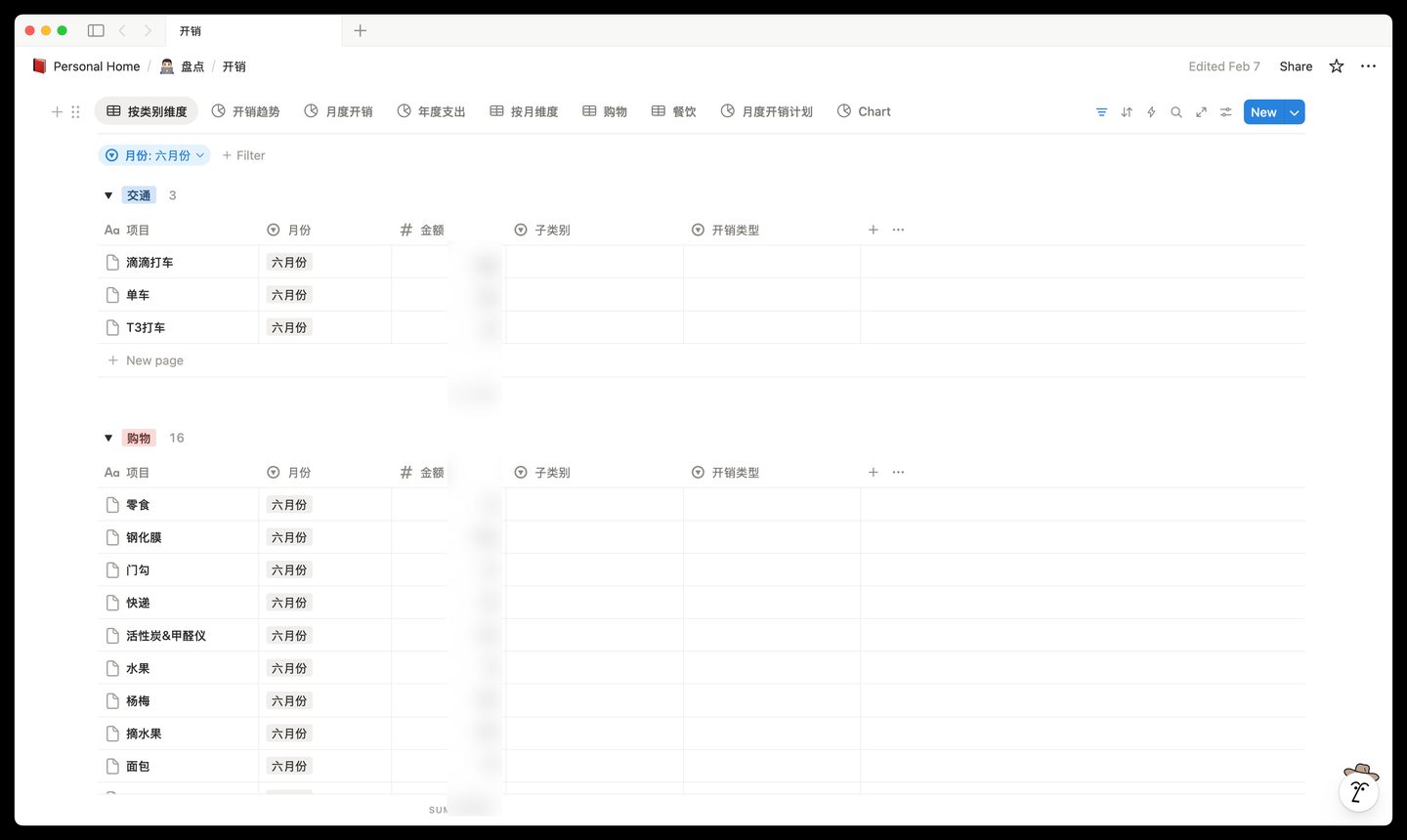
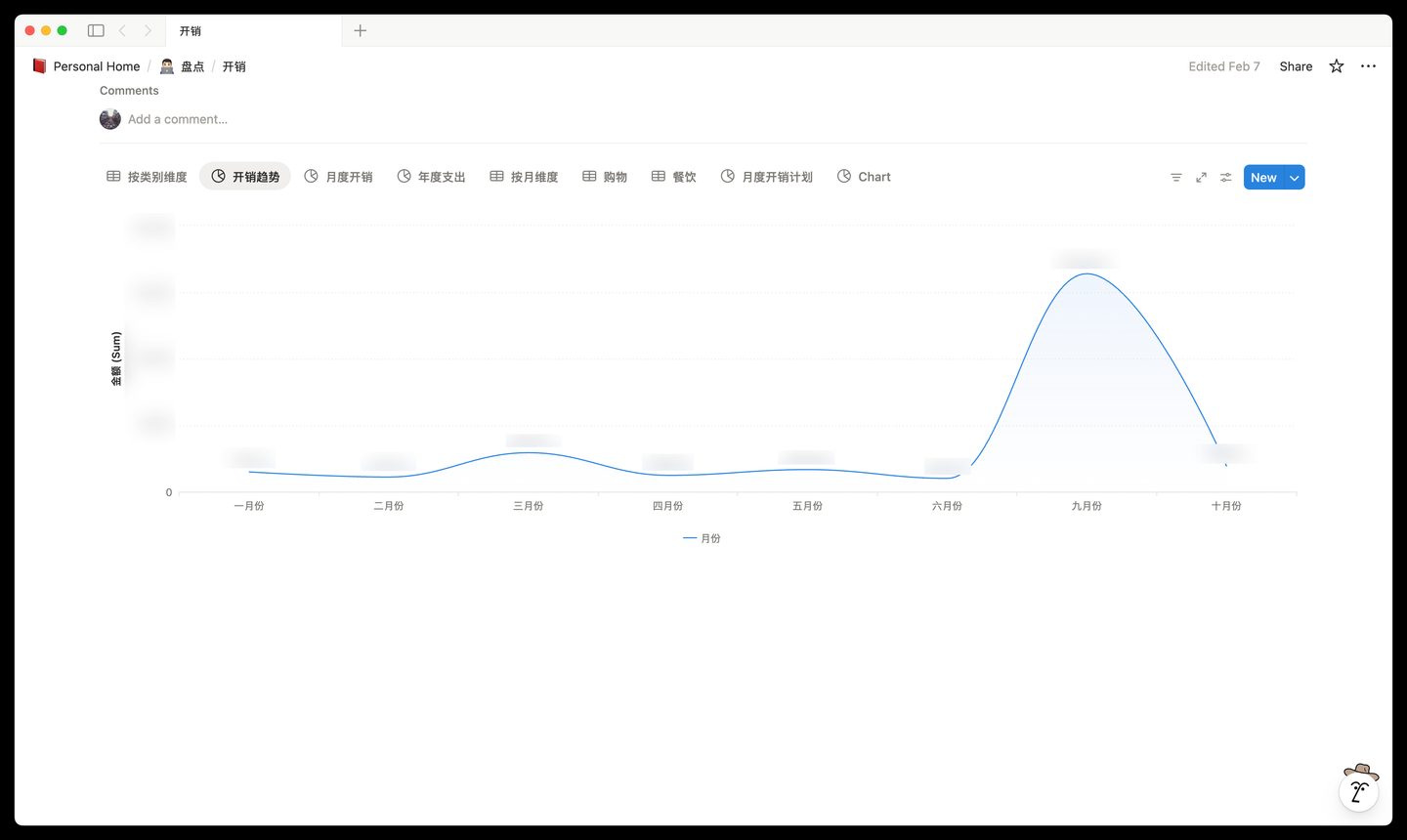
In the course of this round of bookkeeping, I also gradually figured out a bookkeeping method that suits me: recording by analyzing payment bills on a monthly basis. This method doesn't require manually entering every transaction; you just need to simply aggregate and analyze, and you can fairly accurately tally up your monthly income and expenses. Each time I record, I also note that month's savings and the transaction records of all my bank cards. Through these three tables—expense transactions, bank card transactions, and savings records—I can paint a very clear picture of my financial situation.
I've kept up this recording method for more than two years, and I'm currently very satisfied with this system.
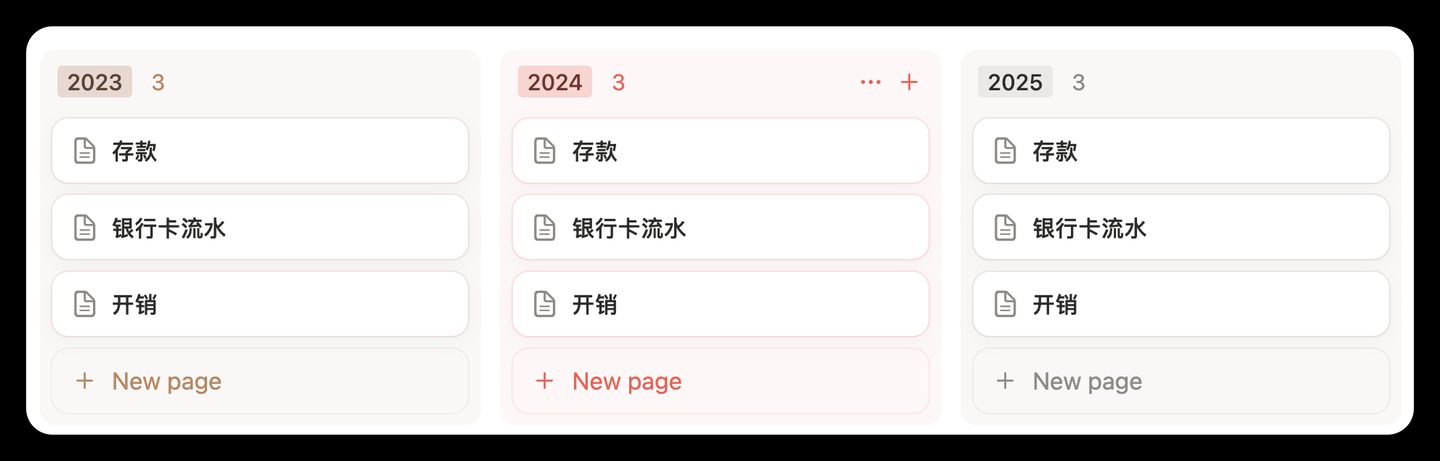
Of course, this isn't a perfect method either, because the process still requires quite a bit of manual work. To make my bookkeeping more convenient, I started looking into ways to improve efficiency.
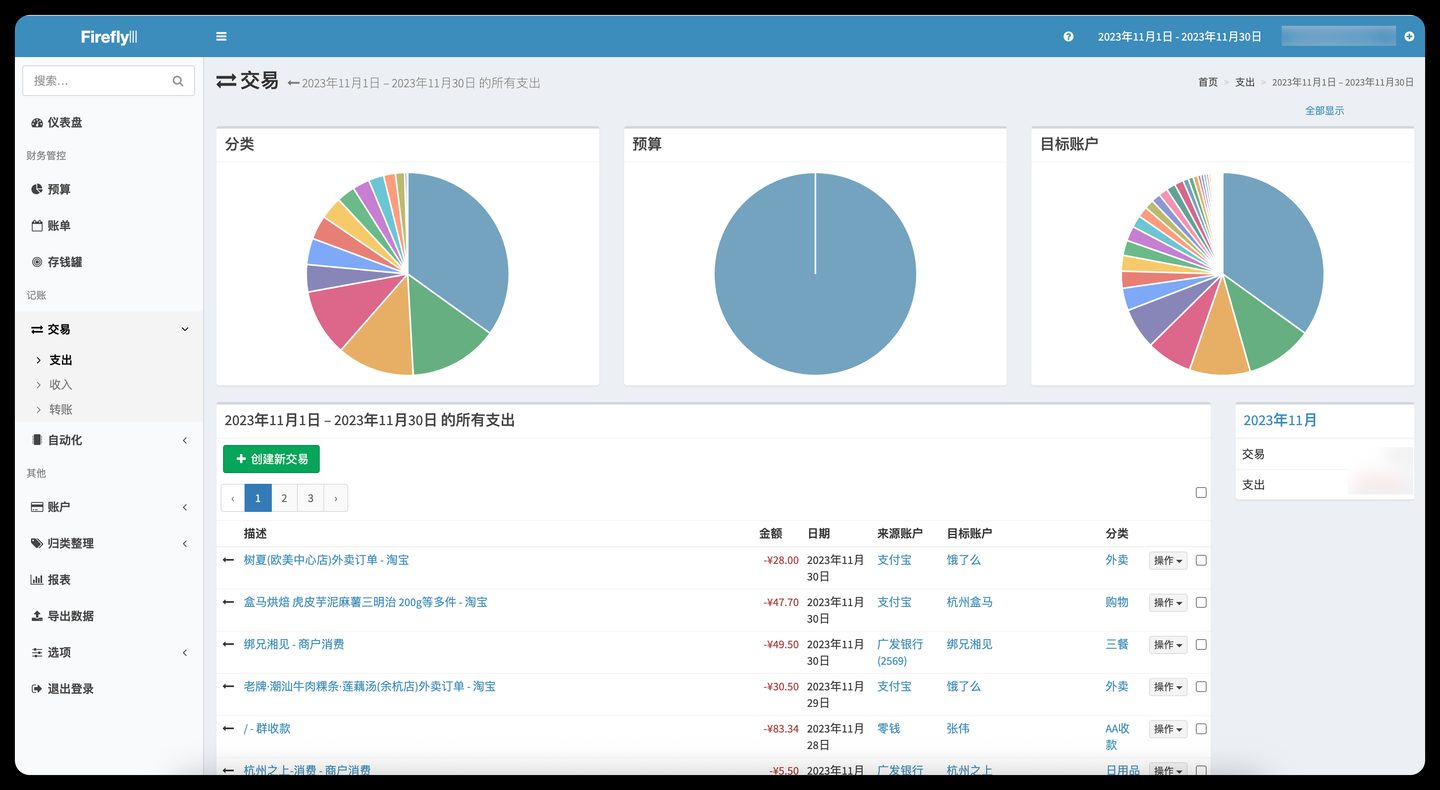
I first deployed Firefly III specifically to store my transaction records. With Firefly III's categorization features, I could fairly easily tally the amount for each expense category. To make it convenient to import billing transactions from various platforms into Firefly III, I developed a simple script program dedicated to parsing CSVs and then calling Firefly III's API to import the transactions.
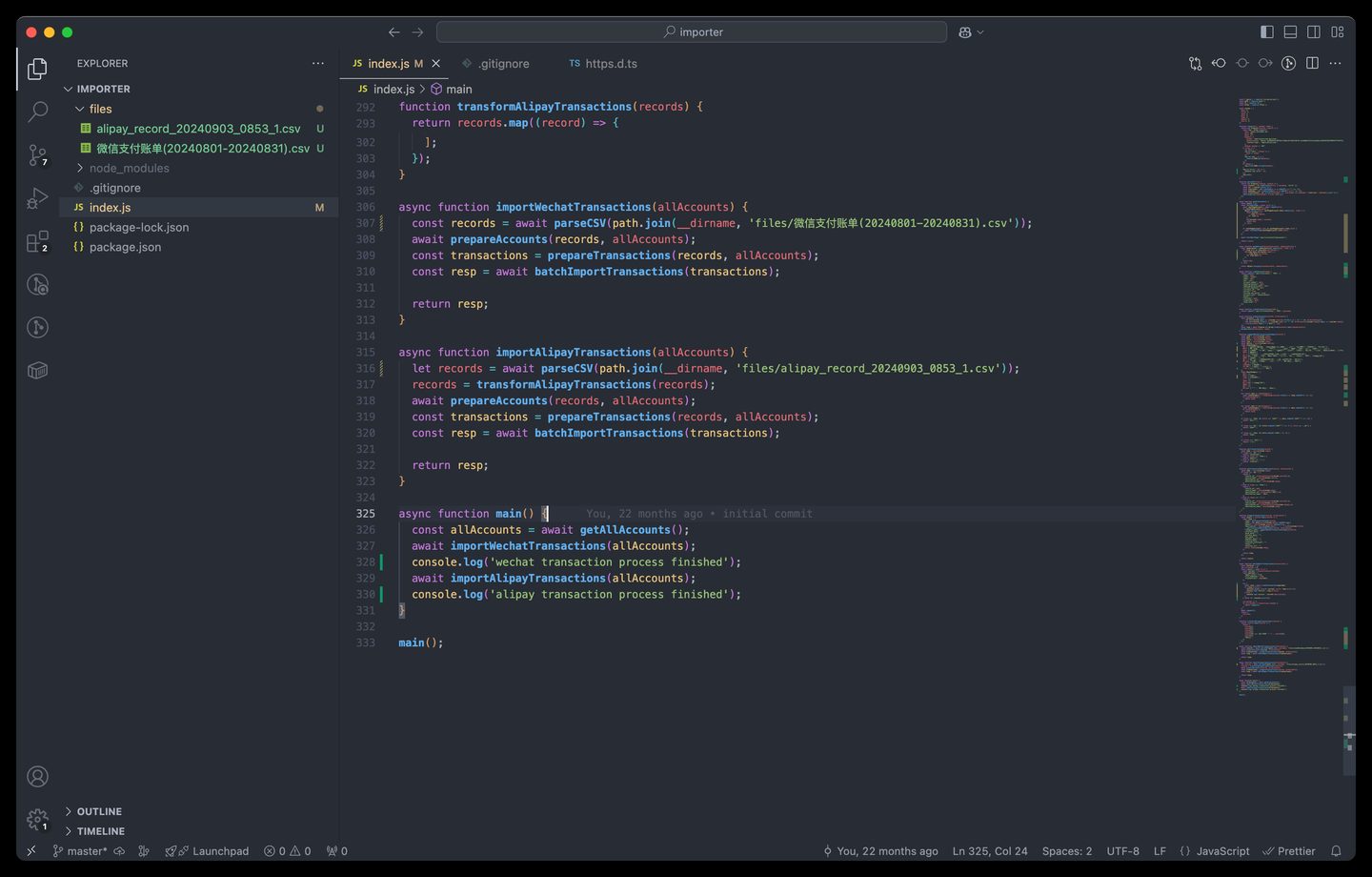
At first this script program was fairly simple and rudimentary; I had to export the billing files myself, put them in a specified directory, and then run the program. During the process, issues such as timeouts and duplicate uploads could also occur. Since the program only ran once a month, at the time I dealt with these issues through manual adjustments and just put up with them, after all, I didn't have much time to specifically optimize it.
Later, with the explosion of AI and the popularity of the Vibe Coding concept, I gradually had an idea: to use AI to help me refactor this script program. At the time I was also particularly curious about whether large models could actually help improve development efficiency, so I paid for a Cursor membership, and through Vibe Coding I iterated this script into a Next.js application. Through this application I could directly upload and import billing files on a web page, and it also had some simple management features.
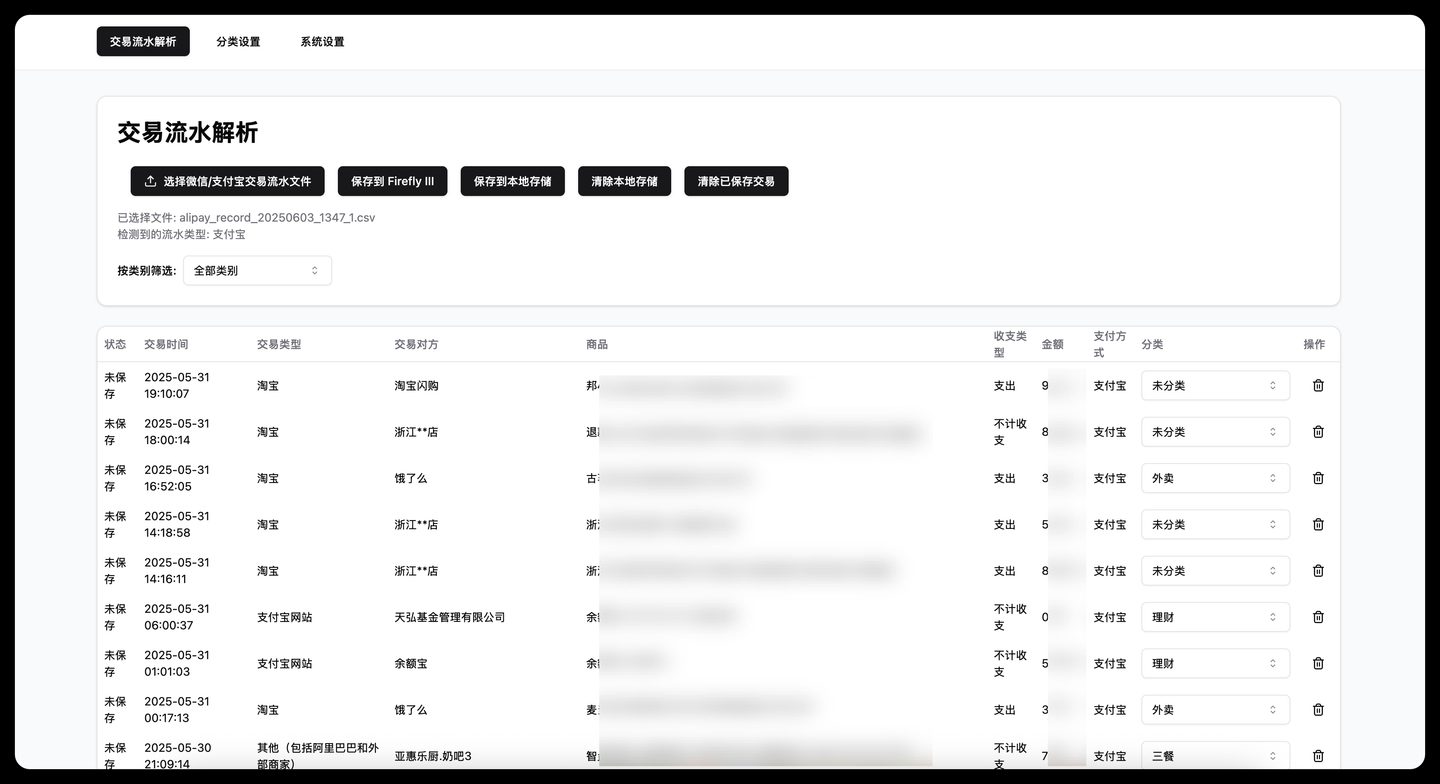
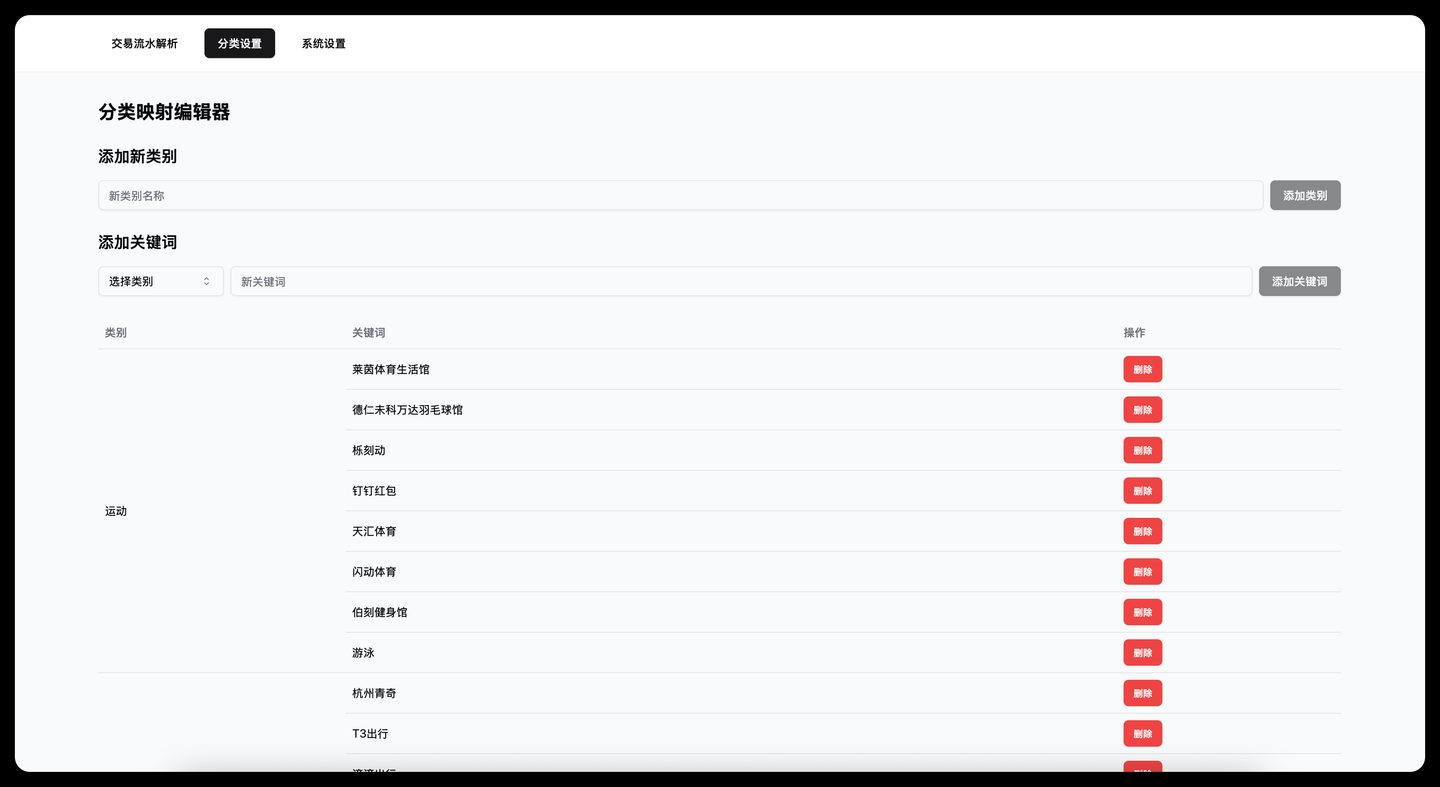
Although its features were still very simple, it genuinely reduced my bookkeeping workload. And so I used this program for bookkeeping for a period of time.
Later on, I began to find Firefly III unpleasant to use: its interface style was rather outdated, it opened very slowly, and its report analysis features weren't that great either. So I made up my mind to use AI Vibe Coding to build a personal finance management tool, and thus Prismira was born:
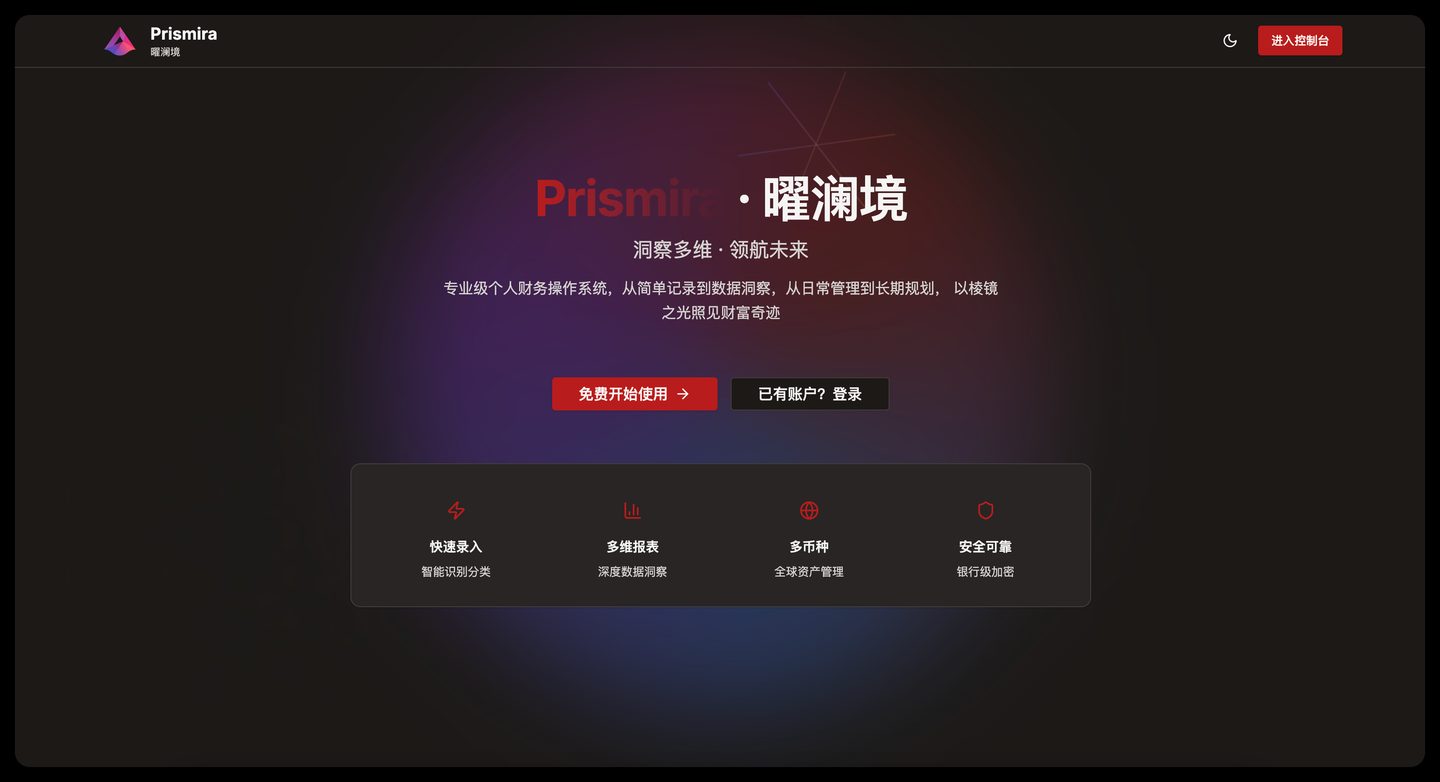
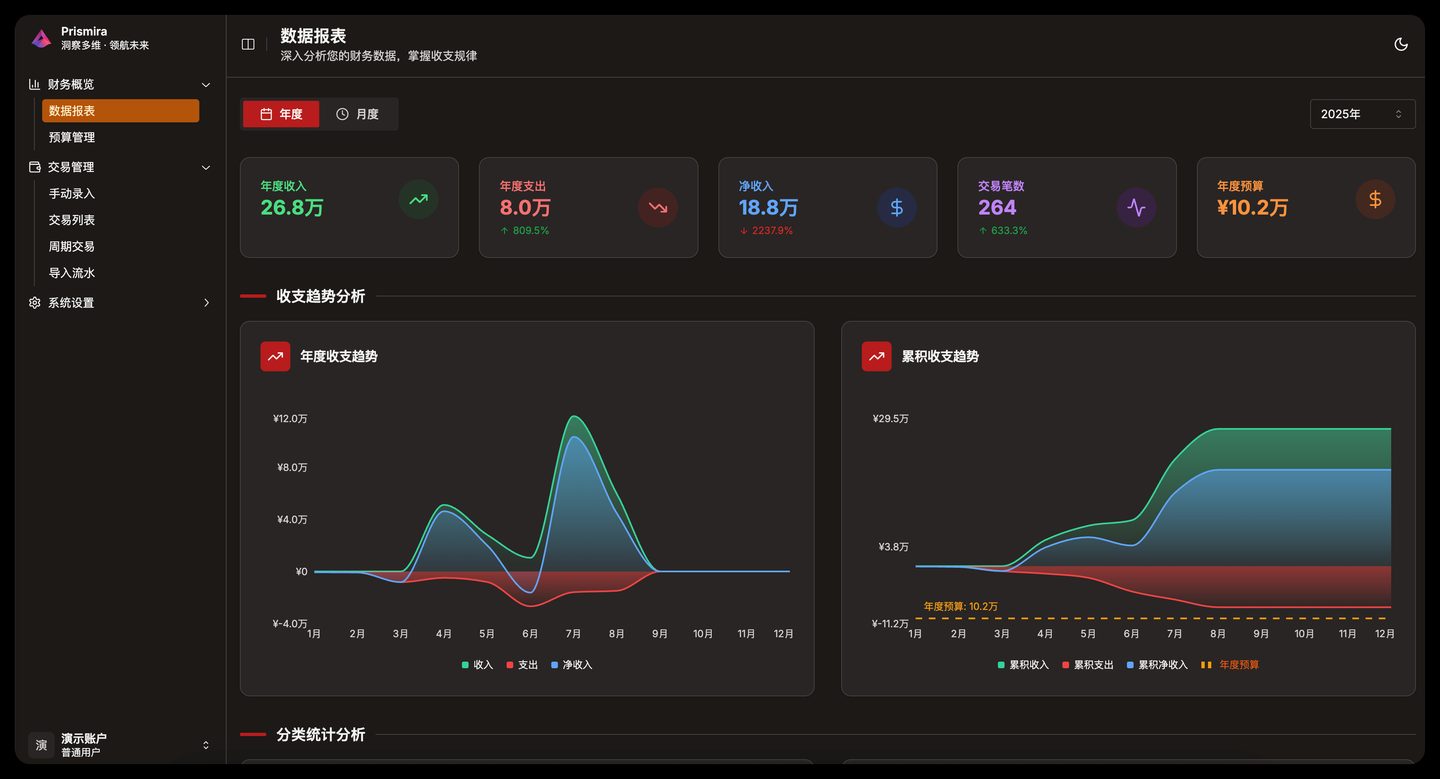
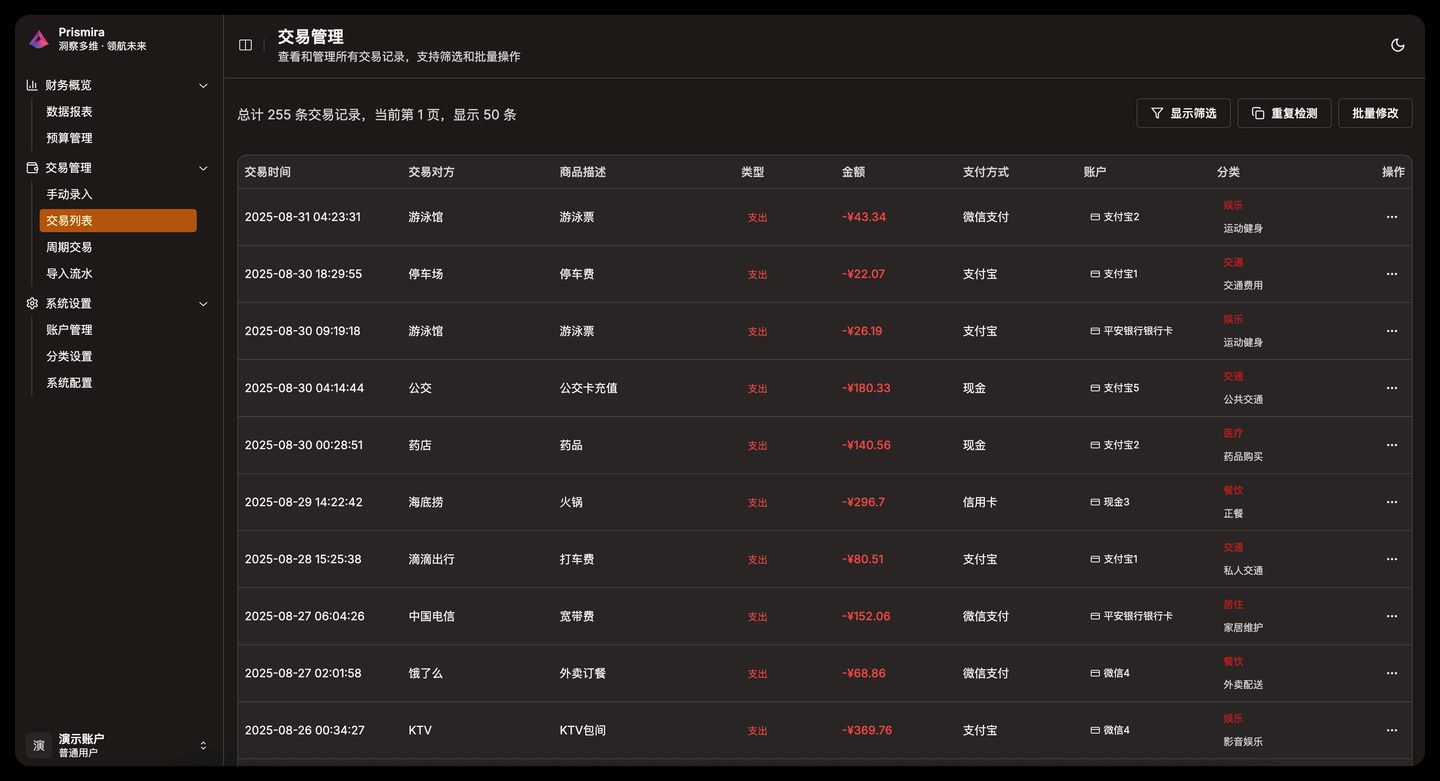
This is the product of two months of intensive Vibe Coding. It can import and analyze various bill files, help me keep records of transactions, generate rich reports for my analysis, and also has a budgeting feature that makes it easy to track my monthly and annual budget usage progress. It has now become my personal finance management hub. At the beginning of each month, I use it to record my expenses and then do a comprehensive asset review.
Although it still has a long way to go before it is perfect and fully polished, and many feature modules are not yet complete, after multiple rounds of iteration, it can already satisfy my own bookkeeping needs quite well.
From giving up to picking up my enthusiasm for bookkeeping again, this process took a lot of thought and time, but it is precisely because I was willing to calm down, think, and act that change happened. This is a process full of achievement and rewards, and I feel very fortunate to have made it this far.
Looking back, through these stages of development, I have not only changed tools in the field of bookkeeping, but also gradually developed different thoughts and understandings about bookkeeping and personal finance.
My Thoughts on Bookkeeping
At each stage, my understanding of bookkeeping was different. In the first stage, I thought bookkeeping should make full use of third-party tools to automate the tedious bookkeeping process. But when such tools lost their "effectiveness," in the second stage I fully recognized a fact: manually recording every transaction is not feasible. By the third stage, with more practice and thought, I gained many new insights into bookkeeping. In summary, they are the following points:
Cashless Transactions
A major drawback of cash transactions is that they are hard to record, which is a particularly big challenge for bookkeeping. With cash transactions, unless you record them immediately at the moment, they are easily forgotten afterward. Online payments, by comparison, are much more convenient. Various payment platforms keep transaction records for users, so when you need to check them later, you only need to open the corresponding app or website.
Fortunately, users in China have by now largely adapted to online payments; WeChat Pay and Alipay in particular have penetrated into the vast majority of cities across the country. As for me, I only occasionally use cash when I go back to my hometown; the rest of the time I use WeChat Pay directly. So I believe this poses no difficulty at all for anyone.
Consolidate Your Payment Methods
There is now a bewildering array of payment platforms, and as long as you have money, you need not worry in the slightest about being unable to spend it. WeChat, Alipay, Cloud QuickPass, credit cards, as well as Baitiao, Jiebei, Huabei, and so on—these are all payment methods commonly used by users in China. Using too many payment methods is not necessarily a good thing for bookkeeping, because you need to tally them across multiple platforms while also making sure you do not double-count (for example, if WeChat is linked to a bank card, then when you use WeChat Pay, a transaction record is stored in both the bank card and WeChat), which is no small amount of work.
Bookkeeping should be as low-threshold and simple as possible, so that you will be willing to stick with it. Therefore I suggest using only one or two payment methods for all your living expenses, which can save a good deal of time when tallying monthly expenses. For most people, the two payment methods WeChat and Alipay are entirely sufficient; both offer bill export functions and basically cover all scenarios, so your expenses equal your WeChat bill plus your Alipay bill, making tallying very simple.
Low-Frequency Batch Recording
Bookkeeping is a very tedious matter. Under the combined effect of inertia and a lack of positive feedback, it is hard to keep recording every day. I think there are mainly two reasons for this: it is easy to forget, and the process is tedious.
The time and place of each transaction are not fixed, and at that moment you may also be handling other things at the same time, so it is very difficult to record it immediately when the transaction is completed. Moreover, the number of transactions per day ranges from a few to as many as dozens; if you record every single transaction, this will be a great challenge to a person's patience.
My experience tells me that rather than recording frequently in small amounts, it is better to record in batches at a lower frequency—that is, to regularly record the bills for a period, such as recording all of last month's expenses and income at the beginning of each month. When the period is lengthened and the time for bookkeeping is fixed, the likelihood of forgetting is greatly reduced, and it also adds a sense of ritual to life. For all the expenses and income within the period, you can quickly collect them through the bill export function of the payment platform, and then simply summarize them. Organizing the bills at a fixed time can also help you calm down, cultivate a flow state, and train your focus; over time, you will naturally not find it tedious.
Take myself as an example: I tally last month's expenses and income on the first weekend of the month. This process usually takes 2–3 hours. Of course, this time is not just for bookkeeping; I also review my investments. Recording once a month, taking two hours each time, is no burden at all for me, and bookkeeping becomes very easy.
Regular review
The point of bookkeeping is not how to better record every transaction, but to use the cash flow from this period to make yourself think and summarize, so as to see your true spending habits clearly. Therefore, rather than spending time researching various bookkeeping apps and methods, it is better to first calm down and simply analyze the data you can access, and see whether it is different from what you thought.
People often have biases in their self-perception. Take me as an example: I often feel that I haven't bought much recently and that this month's expenses should be very low. But the facts tell me that my monthly spending exceeds the budget every month. If I don't review, then this situation will not change.
Recording without analyzing is equivalent to doing work for nothing and does not help much with your wealth management. Only after carefully analyzing and reviewing your spending records can you understand your spending habits, such as which categories of spending are necessary and which are non-essential but over budget. Once you have some understanding of your spending habits, you will know how to do a good job of expense planning.
Make a good annual budget
When I first started keeping accounts, I would set a monthly budget for myself. But in practice, I found that basically no month ever went according to the goals I had set. The reason is that when setting a monthly budget, I used the average monthly spending from the past as a reference, but the reality is that spending in different months is full of uncertainty and fluctuates greatly, so a budget based on an average becomes largely meaningless in such situations.
Later I switched to another approach: I no longer focused on monthly budgets and only looked at annual budgets. For ordinary people, although income and expenses in different years also fluctuate, overall the fluctuations are not as large as those in monthly income and expenses, so using the income and expenses of previous years as a guide for the next year's spending budget is relatively reliable. Unless there is a relatively large one-time expense in a certain year, such as buying a car or a house, or your life undergoes earth-shaking changes, a leap in class, a huge change in consumption habits, and so on. Otherwise, under normal circumstances, the annual spending fluctuation should be predictable and calculable.
I have a method for calculating my own annual spending budget, which consists of these steps:
- Count last year's spending by category, such as 50,000 for shopping and 40,000 for meals
- Do a simple review of the spending in each category, and based on your own situation, judge whether you spent too much or too little in that category
- Based on the review results from the previous step, first set a preliminary budget amount for each category
- Look ahead to whether you will have any irregular expenses in each category next year, such as buying a car or hiring a personal trainer. If so, add the amount of the irregular expense to the initial budget amount from the previous step to get the final budget amount for each category
- Add up the budgets for all categories to get the annual budget
To make the annual budget as flexible as possible, I usually add an "other" spending category and allocate 10,000 to 20,000 as a buffer for the annual budget, so that when unexpected expenses arise, this category can provide a certain margin for error.
Having an annual budget is equivalent to setting the tone for your spending in the coming year, stipulating that your total annual spending should not exceed this amount. Even if the spending amount in each category next year does not follow the budget, as long as total spending does not exceed the annual budget, then the year's spending control can be considered successful.
Keeping accounts is the first step in personal asset management.
As my bookkeeping experience has grown, I've found that my regular monthly bookkeeping is no longer just bookkeeping—it's a comprehensive asset review. Building your own asset system through bookkeeping, and thereby forming your own asset management approach, is a very effective and smooth path. Reviewing your monthly and annual income and expenses will prompt you to think about how to better "increase income and reduce expenditure"—that is, how to spend less and earn more—so as to achieve steady asset growth. And this itself is personal asset management; it is not some profound, mysterious, or unattainable thing.
Conversely, if you want to skip bookkeeping and go straight to asset management, this may not be the most reasonable or efficient approach. For example, when you get paid each month, how would you plan to use that money? How much should be allocated to investment, savings, and consumption? When you don't keep accounts, you have no idea of your spending level for the coming month, so you can only guess, and through "guessing" you allocate and manage your funds. The result of doing this is predictable: low efficiency in the use of funds, and it may even lead to cash flow problems.
Therefore, if you want to do a good job of personal asset management, start with bookkeeping and expense reviews. Only after you have a full understanding of your asset situation and spending habits will you feel in control and be able to make money generate more money.
What bookkeeping means to me
Bookkeeping has become a habit of mine. The mechanism of this habit is that whenever I complete a session of bookkeeping and asset review, I feel a great sense of accomplishment; it gives me a better understanding of my asset situation, and I am one step closer to the wealth goals I want to achieve. From this process I gain a great deal of positive feedback, and at this point my inner greed system craves even more positive feedback, which in turn makes me look forward to the next round of bookkeeping.
Bookkeeping—or rather, asset management and review—fills me with a sense of accomplishment. It makes every number in my account no longer cold and static, but like flowing water, painting for me where these numbers come from and where they go. Through it, you can witness how you become a "millionaire" or "multimillionaire," and how you reach each milestone. What bookkeeping records is not transaction after transaction, but every drop of sweat and effort on your journey to becoming a "wealthy person."
Final Thoughts
Over the past few years, my assets have grown severalfold, and I feel very fortunate to have recorded this entire process. Every time I review, I can't help but marvel—turns out I'm this impressive; in the past, this was something I wouldn't have dared to imagine.
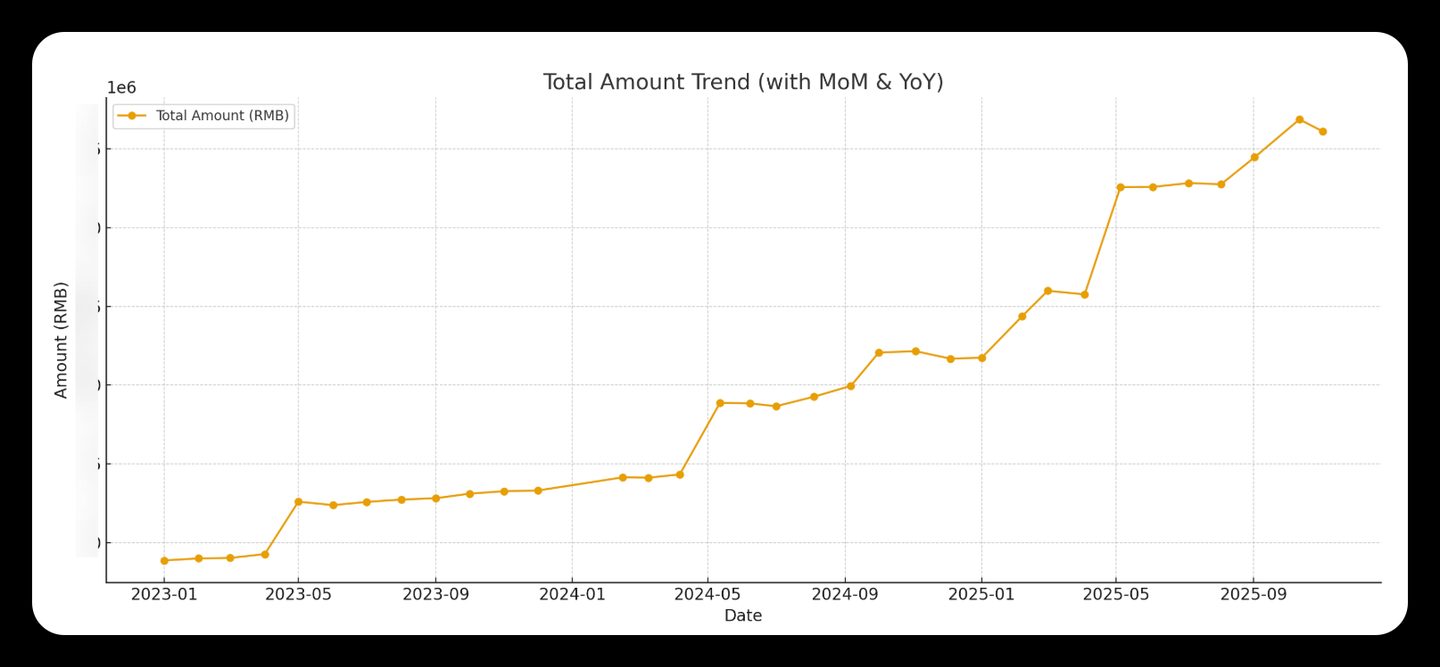
If I were to sum up the key behind it, it's not investment strategy, but ratherlong-term self-review and financial awareness。
The meaning of bookkeeping is not about becoming a "wealthy person," but about seeing life clearly through numbers. When you start to earnestly record, reflect, and adjust, every expense is telling you:
"You are in control of your own life."
Starting today, give yourself a small goal—even if you only stick with it for three months—record your income and expenses, then look back, and you'll be surprised—
you have already seen a clearer version of yourself.